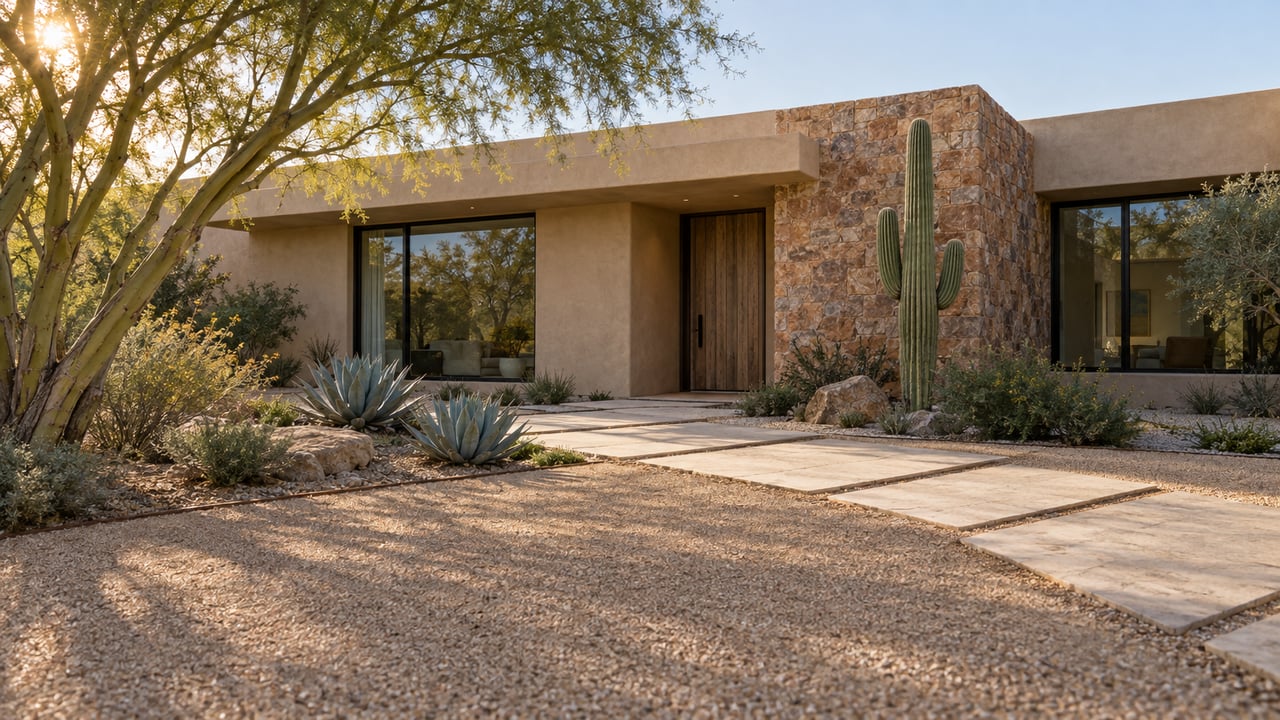
Why Selling Fast in Cedar Rapids Won't Speed Up Buying in North Scottsdale
October 1, 2026
October 1, 2026
A Cedar Rapids seller who lists a house in September and has a signed offer within a week isn't imagining things. That pace is close to normal there right now. What catches the same person off guard a few weeks later is the opposite experience on the buying side, when a North Scottsdale offer sits, gets countered, sits again, and doesn't close until well past the date the Iowa proceeds already landed in escrow. The two transactions are not running on the same clock, and the space between them is where relocation timelines actually come apart.
Most people planning this move compare one number to another: a Cedar Rapids home worth roughly $214,766 on average as of July 2026 against a North Scottsdale median that sits well north of $1 million. That comparison is real, but it isn't the part that trips people up. The part that trips people up is pace, and the two markets don't share one.
Zillow's July 2026 update on Cedar Rapids put the average home value at $214,766, up 2.5% over the prior year, with typical listings moving to pending in about five days. That's a market where a well-priced three-bedroom doesn't sit around waiting for a second look. Sellers there are used to a short window between "for sale" and "under contract," and that experience shapes expectations for the next purchase, even when the next purchase is fifteen hundred miles away in a market with a completely different rhythm.
The mistake isn't assuming Cedar Rapids will keep moving quickly. It's assuming North Scottsdale will match it.
Scottsdale's own citywide median tells a confusing story depending on which tracker you check. One Redfin window ending in August 2026 put it at $907,000. A market report covering the same general period put it closer to $945,000 based on closings through August. Neither number is wrong. They're measuring slightly different mixes of the same city, and that's exactly the problem with treating Scottsdale as a single market in the first place.
North Scottsdale, the submarket that actually matters for anyone comparing DC Ranch, Grayhawk, Silverleaf, Troon, Whisper Rock, Mirabel, Estancia, or Desert Mountain, runs its own numbers. Based on closings through July 2026, the median across ZIP codes 85255, 85262, and 85266 sat near $1.325 million. Redfin's three-month window ending in June 2026 showed a $1.2 million median for North Scottsdale specifically, up 8.7% year over year, with homes typically taking 69 to 77 days to sell rather than days.
That pace isn't uniform across the price range either. Homes priced under about $1.2 million are still moving with real competition. Above $1.5 million, the picture flips. As of September 2026, roughly 76% of active Scottsdale listings had already absorbed at least one price cut. In the trophy tier, homes closing above $3 million were routinely settling 7 to 12 percent under their original list price after sixty or more days on market. Cash purchases were running around 38% of North Scottsdale transactions, compared to roughly 26% citywide, a gap that reflects how much of this tier's activity comes from buyers who aren't waiting on financing or a home sale to clear first.
So the honest read isn't "North Scottsdale is slow." It's that the trade-down tier still behaves like a seller's market and the golf-and-gated tier behaves like a buyer's market, and a relocator shopping DC Ranch or Silverleaf is shopping the slower half.
Here's where the ZIP-level detail actually changes a decision. Based on closings reported through July 2026, a $1.1 million budget was a top-of-market shopper in ZIP 85254 and an entry-level shopper in 85255. Same dollar figure, two completely different buying experiences, because 85255 is where DC Ranch and Grayhawk sit, and that inventory simply starts higher.
For a Cedar Rapids seller running the math on proceeds from a $215,000 house, this matters less as a straight trade and more as a signal about where the search should even start. The number on the Iowa closing statement was never going to fund a golf-community purchase outright. What it can do is clarify, before house-hunting begins, which North Scottsdale ZIP code actually matches the intended budget rather than the one that sounds right on a map.
| Market | Typical price point (2026) | Pace | Negotiating room |
|---|---|---|---|
| Cedar Rapids | ~$214,766 average value (July 2026) | Listings moving to pending in about 5 days | Limited; tight, fast-moving inventory keeps sellers in control |
| North Scottsdale, under $1.2M | Trade-down tier | Still draws competitive offers | Slight seller tilt on well-prepared homes |
| North Scottsdale, above $1.5M | Golf and gated luxury tier (DC Ranch, Silverleaf, Troon) | 69 to 77+ days typical, longer past the 60-day mark | Real buyer leverage; 76% of active listings carrying a price cut as of September 2026, trophy sales over $3M closing 7-12% under original list |
The timing gap isn't just an inconvenience. It's the specific point where relocating buyers end up making a rushed decision, either overpaying to lock in a North Scottsdale home before they've sold in Iowa, or accepting a lowball offer on the Cedar Rapids side because the Arizona purchase can't wait any longer. Three tools handle that gap, and each fits a different situation.
None of these tools erase the timing gap. They give a relocator a way to choose which side of the gap to absorb, rather than getting surprised by it midway through two transactions.
The timing problem gets an added layer for anyone selling a Cedar Rapids rental property with the intent of buying investment or short-term rental property in North Scottsdale and deferring capital gains through a 1031 exchange. The federal rule sets deadlines for identifying a replacement property and closing on it. That window runs on its own schedule regardless of how North Scottsdale's price tier is behaving that quarter, which means an investor working this angle needs the Arizona search largely mapped out before the Iowa property even closes, not after.
Does a fast Cedar Rapids sale give me leverage in North Scottsdale? Not directly. Speed on one side of a transaction doesn't transfer to the other. What it does give you is clarity on proceeds and timing sooner, which is useful for structuring the Arizona offer, but the North Scottsdale seller is reacting to conditions in their own price tier, not to how quickly your Iowa home moved.
Can I make my North Scottsdale offer contingent on selling my Cedar Rapids home first? It's possible but uncommon in the golf and gated communities, and sellers there generally want your current home already under contract before they'll consider it. Listing and going under contract in Cedar Rapids first puts you in a stronger position to negotiate in North Scottsdale.
How much time should I plan between my Cedar Rapids closing and my North Scottsdale closing? There's no fixed answer, since it depends on which North Scottsdale price tier you're shopping, but the sub-$1.2 million tier moves closer to weeks while the luxury tier above $1.5 million can run 60 days or more before you're even under contract. Building in a rent-back or short-term housing plan on the Iowa side is more realistic than assuming both transactions will land on the same week.
Coordinating a sale in one market against a purchase in another is the part of this move that actually determines how smooth it feels, not the price gap between the two cities. If you're weighing the timing on a Cedar Rapids sale against a North Scottsdale purchase, Brent Votroubek works both sides of this exact move and can walk through what your specific timeline should look like.
This article is general information, not legal, tax or financial advice. Consult a qualified professional about your situation.
Stay up to date on the latest real estate trends.
For expert guidance rooted in deep local knowledge and real-world experience. I bring clear communication, strong negotiation, and a proactive approach to keep you ahead of the market at every step. From first showing to final signature, I’m committed to delivering results while making the process smooth, strategic, and stress-free.